Source Toyota Prado Hybrid SUV for Family, Commercial, and Off-Road Use
Explore 30 listings for the Toyota Prado Hybrid SUV, featuring automatic transmissions, AWD systems, and hybrid fuel options. Buyers can compare specifications including displacement, braking systems, and seating configurations to find suitable vehicles for family, commercial, and off-road applications.
Key considerations
Products List


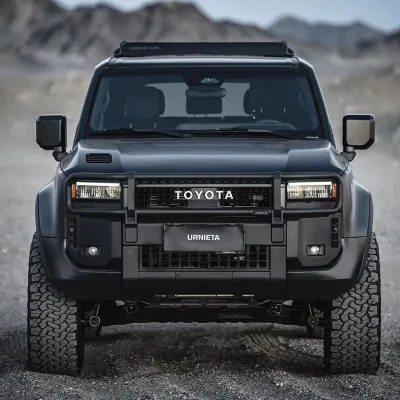


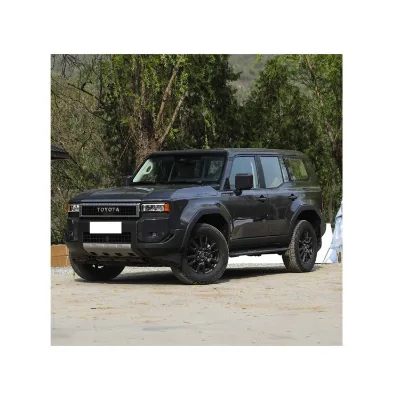



Comprehensive Sourcing Guide
Strategic Sourcing Guide for Toyota Prado Hybrid SUV Procurement
The global automotive market has witnessed a significant shift toward electrified powertrains, with the Toyota Prado Hybrid SUV emerging as a critical asset for buyers seeking a balance between rugged capability and fuel efficiency. For procurement professionals, sourcing this specific vehicle class requires a nuanced understanding of technical specifications, regulatory compliance, and supply chain dynamics. This guide provides an evidence-based framework for evaluating potential supply sources, ensuring that the acquired fleet meets operational demands while adhering to safety and quality standards. The focus remains strictly on the observable attributes of the vehicle category, avoiding speculative claims while highlighting the specific data points available in current market listings.
Technical Specifications and Powertrain Architecture
Understanding the core technical architecture is the first step in any procurement process. The Toyota Prado Hybrid SUV is characterized by a sophisticated powertrain designed to deliver high torque for off-road conditions while maintaining urban fuel economy. Based on available product data, the displacement for these units typically ranges between 2.0L and 2.6L, with specific configurations featuring a 2.0L L4 Hybrid engine. This engine is paired with an E-CVT transmission, which is essential for managing the seamless transition between electric and gasoline power. The vehicle utilizes a Nickel-Metal Hydride Battery, a technology known for its durability and safety in high-voltage environments, distinguishing it from some newer lithium-ion alternatives in terms of thermal stability.
The driving dynamics are further defined by the available drivetrain options. While some listings indicate All-Wheel Drive (AWD) configurations suitable for the "Road" conditions and commercial applications, other variants may offer Front-Wheel Drive (FWD) for more urban-centric usage. The braking systems observed in this category vary, with some units equipped with Hydraulic systems and others featuring Electromagnetic braking, suggesting a need for buyers to verify the specific braking architecture against their maintenance capabilities. The vehicle dimensions are substantial, with a wheelbase of 2850 mm and overall dimensions often cited around 4915 mm in length, 1980 mm in width, and 1925 mm in height. These dimensions place the vehicle firmly in the "Medium to Large SUV" category, offering a 5-door, 5-seat body structure that is ideal for both family and commercial transport.
Compliance, Certification, and Regulatory Standards
Procurement of international vehicles necessitates rigorous verification of compliance with destination market standards. The product data indicates that these vehicles originate from China, with specific manufacturing hubs noted in locations such as Tianjin. Buyers must verify that the "prod_standard" dimensions and specifications align with the regulatory requirements of their target market, as vehicle dimensions like 4915x1980x1925mm are critical for registration and safety inspections. Furthermore, the vehicle's energy type is listed as "Gasoline Hybrid" or "Plug-in Hybrid," which may trigger specific environmental regulations regarding emissions and battery disposal.
The "prod_packing" methods, ranging from RO-RO (Roll-on/Roll-off) to Container shipping, must be evaluated against the fragility of the hybrid components. While the data mentions "International Standards" for packing, buyers should not assume all units meet specific destination safety certifications without explicit documentation. The "Condition" is consistently listed as "New" or "Brand New," but this does not automatically imply compliance with local safety ratings. Procurement teams must request third-party test results and certification documents that verify the vehicle's adherence to local crash safety standards, emission limits, and battery safety protocols. The absence of a sunroof in some configurations and the availability of "Steering: Left" or "Left-Hand Drive (LHD)" positions further complicate the compliance matrix, requiring precise alignment with the legal driving side of the destination country.
Cost Drivers and Total Cost of Ownership Analysis
The observed price range for these vehicles spans from $15,800 to $99,999 USD, a variance that reflects differences in trim levels, battery capacity, and specific feature sets. The "Key Advantage" of the Toyota Prado Hybrid is often cited as "Low Operating Cost," driven by the "High Fuel Efficiency" focus. The WLTC combined fuel consumption is recorded at 10.11 L/100km, a figure that serves as a baseline for estimating long-term fuel expenditures. However, the total cost of ownership (TCO) extends beyond fuel; it includes maintenance, battery replacement, and insurance.
The "Max Power" specifications, ranging from 150 Kw to 165 Kw depending on the trim (430/520 or 610), directly influence the vehicle's performance and potentially its insurance premiums. Buyers should note that the "Fuel Type" being a "Plug-in Hybrid" or "BEV" (Battery Electric Vehicle) in certain listings introduces complexity to the cost structure, as charging infrastructure requirements may add to the operational overhead. The "Customization: Available" attribute suggests that additional costs may be incurred for specific body colors like Gray, Black, White, or Copper, or for specific commercial modifications. When evaluating the price range, procurement teams must distinguish between base models and high-spec versions to ensure the budget aligns with the required performance metrics.
Typical Applications and Operational Use Cases
The "Usage" attributes for the Toyota Prado Hybrid SUV are diverse, explicitly covering "Family Car" and "Commercial Vehicle" segments. The robust "Body Structure" of a 5-door, 5-seat SUV makes it highly suitable for family transport, offering ample space for passengers and cargo. Simultaneously, the "Road" condition capability and "AWD" or "FWD" options make it a viable choice for commercial fleets operating in varied terrains. The "Body Type" is described as both "Closed" and "Open" in different listings, indicating a versatility that can be tailored to specific commercial needs, such as passenger transport or light cargo hauling.
The "Drive Position" is consistently noted as Left-Hand Drive (LHD), which is a critical factor for buyers in markets where right-hand traffic is the norm. The "Condition" being "New" ensures that the vehicle is ready for immediate deployment without the need for extensive refurbishment. The "Max Speed" of 170 km/h indicates that the vehicle is capable of highway travel, making it suitable for long-distance logistics or inter-city family travel. The "Fuel Economy Focus" on high efficiency makes it particularly attractive for commercial fleets aiming to reduce carbon footprints and operational costs, while the "Level" of "Medium to Large SUV" ensures it meets the comfort and safety expectations of family users.
Supplier Evaluation and Sourcing Verification
When evaluating suppliers for the Toyota Prado Hybrid SUV, buyers must prioritize transparency regarding the "prod_origin" and "prod_model" details. The data indicates multiple models, including "Toyota Prado," "Prado 4X," and "leapmotor," suggesting a complex supply chain where different manufacturers may produce vehicles under similar names or specifications. Buyers should verify the exact "prod_model" to ensure they are purchasing the intended Toyota-branded vehicle rather than a rebranded or alternative model. The "prod_packing" methods, such as "Container" or "RO-RO," should be confirmed to ensure the vehicle arrives without damage, particularly given the sensitive nature of hybrid battery systems.
Supplier reliability can be assessed by their ability to provide clear documentation on the "prod_standard" and "prod_origin." The presence of "Tianjing, China" as a specific origin point requires verification of the specific factory's quality control processes. Buyers should avoid suppliers who cannot provide a clear chain of custody or who offer vague descriptions of the "Condition" or "Energy Type." The "Customization: Available" attribute should be treated as a service offering that requires clear contractual terms regarding lead times and additional costs.
Quality Control and Long-Term Procurement Considerations
Quality control for hybrid SUVs involves rigorous inspection of the battery systems, electric motors, and internal combustion engines. The "Type of Battery" being Nickel-Metal Hydride requires specific handling and maintenance protocols that differ from traditional gasoline vehicles. Buyers should implement a quality assurance protocol that includes pre-delivery inspections focusing on the "Braking System," "Gearbox," and "Engine" performance. The "Condition" of "New" or "Brand New" should be verified through VIN checks and manufacturer warranties.
Long-term procurement considerations must account for the "Fuel" type and the availability of spare parts. The "Displacement" range of 1600-2500CC and the specific engine configurations (2.0L L4 Hybrid) mean that maintenance requires specialized technicians familiar with hybrid systems. The "Key Advantage" of low operating cost is contingent on the longevity of the battery and the efficiency of the hybrid system over time. Buyers should negotiate service agreements that cover battery health checks and software updates for the E-CVT transmission. The "Max Power" and "Max Speed" specifications should be monitored to ensure the vehicle maintains its performance capabilities throughout its service life.
Comparative Analysis of Vehicle Attributes
To facilitate decision-making, the following table summarizes the key attributes observed in the current market for the Toyota Prado Hybrid SUV category. This comparison highlights the variability in specifications that buyers must navigate during the sourcing process.
| Attribute | Observed Range/Value | Procurement Implication |
|---|---|---|
| Product Model | Toyota Prado, Prado 4X, Leapmotor | Verify exact model to ensure brand alignment. |
| Fuel Type | Hybrid, Plug-in Hybrid, Gasoline Hybrid | Determine charging infrastructure needs. |
| Engine Displacement | 2.0-2.6L / 1600-2500CC | Match engine size to load requirements. |
| Drive System | AWD, FWD | Select based on terrain and road conditions. |
| Battery Type | Nickel-Metal Hydride | Plan for specific battery maintenance protocols. |
| Dimensions (LxWxH) | 4915x1980x1925mm / 4460x1825x1625mm | Verify fit for storage and transport logistics. |
| Transmission | E-CVT | Ensure compatibility with local maintenance skills. |
| Condition | New, Brand New | Confirm warranty status and delivery timeline. |
| Origin | China, Tianjing, China | Assess import duties and shipping routes. |
| Price Range | $15,800 - $99,999 USD | Budget allocation based on trim and features. |
This table underscores the necessity of detailed specification checks before finalizing any procurement contract. The variability in dimensions and powertrain configurations means that a "one-size-fits-all" approach is ineffective. Buyers must align their specific operational needs with the precise attributes of the vehicle being sourced.
Final Procurement Recommendations
Sourcing the Toyota Prado Hybrid SUV requires a disciplined approach that prioritizes technical accuracy and regulatory compliance. The observed data points, from the 2.0L hybrid engine to the 2850 mm wheelbase, provide a solid foundation for evaluation, but they must be validated against the specific requirements of the buyer's market. The price range of $15,800 to $99,999 USD reflects the diversity of the market, necessitating a clear definition of the desired trim level and feature set. By focusing on the verified attributes of the vehicle, such as the Nickel-Metal Hydride battery and E-CVT transmission, buyers can mitigate risks associated with unverified claims.
Ultimately, successful procurement depends on the ability to navigate the complex landscape of hybrid vehicle specifications, ensuring that the acquired fleet delivers on the promise of low operating costs and high fuel efficiency. The "Medium to Large SUV" classification offers versatility for both family and commercial use, but the specific configuration must be chosen with care. Buyers should maintain a rigorous verification process for all standards, origins, and conditions to ensure that the final acquisition meets the highest standards of quality and performance.
FAQs
What is the fuel type for the Toyota Prado Hybrid SUV?
The vehicle utilizes a Hybrid fuel type, specifically Gasoline Hybrid or Plug-in Hybrid configurations. Some listings also indicate Nickel-Metal Hydride Battery technology for energy storage. Buyers should verify the specific energy type against their local charging infrastructure requirements.
Which dimensions apply to the Toyota Prado Hybrid SUV?
Typical dimensions are approximately 4915x1980x1925mm, though some variants list 4460x1825x1625mm. The wheelbase is consistently 2850 mm. Procurement teams must confirm the exact standard dimensions to ensure compliance with local registration and transport regulations.
Can buyers customize the Toyota Prado Hybrid SUV color?
Yes, customization is available for colors including White, Gray, Black, and Copper. The standard listing notes these options are open to buyer selection. Additional costs may apply for specific customizations, so contracts should clearly define the final color and associated pricing.
What is the origin location for these Toyota Prado Hybrid SUVs?
The products originate from China, with specific manufacturing hubs noted in Tianjing. Buyers must verify the exact factory location to assess import duties and shipping routes. Origin documentation is critical for ensuring the vehicle meets the intended destination market standards.
How is the Toyota Prado Hybrid SUV packed for shipping?
Packing methods include RO-RO, Container, and International Standards. The specific method depends on the supplier and the sensitivity of the hybrid battery components. Buyers should confirm the packing type to ensure the vehicle arrives without damage during transit.
What is the price range for the Toyota Prado Hybrid SUV?
The observed price range spans from 15800 to 99999 USD. This variance reflects differences in trim levels, battery capacity, and feature sets. Procurement teams must distinguish between base models and high-spec versions to ensure the budget aligns with required performance metrics.